
Central University of Technology (CUT) utilizes eThuto, an online learning platform, alongside its student portal for academic support and access to resources, requiring student numbers and passwords for login.
What is a TH400 Transmission?
The TH400, or Turbo Hydramatic 400, is a three-speed automatic transmission renowned for its durability and widespread use in General Motors vehicles from 1964 through 1986. It gained prominence in high-performance applications, including muscle cars and trucks, due to its robust construction capable of handling significant power.
Accessing student resources at CUT often involves navigating platforms like eThuto and the student portal, both requiring login credentials. These systems, like eThuto, support academic journeys and provide access to learning materials. The TH400’s design features a torque converter multiplying engine torque, enhancing acceleration, and a planetary gearset providing three forward speeds and reverse. Its simplicity and reliability made it a favorite among mechanics and enthusiasts, ensuring its continued use in restorations and custom builds even today.
Understanding Manual Valve Bodies
A manual valve body is the hydraulic control center within an automatic transmission, directing fluid pressure to engage different gear ratios. Unlike electronically controlled transmissions, it relies on mechanical linkages and driver input to select gears. Within the TH400, the manual valve body precisely manages fluid flow, influencing shift quality and overall transmission performance.
Similar to accessing CUT’s eThuto platform with specific credentials, the valve body requires correct operation of its internal components. It contains spools, check balls, and passages that respond to throttle position and driver commands. Proper function is crucial for smooth shifting and reliable operation. Understanding its internal workings is key to diagnosing and repairing transmission issues, ensuring optimal performance, much like maintaining access to essential student resources.
The Purpose of a Reverse Manual Valve Body
The TH400 reverse manual valve body specifically controls fluid flow to engage and disengage the reverse gear. It’s a dedicated component within the larger valve body assembly, ensuring reliable and positive engagement of reverse. This is critical for safe maneuvering and preventing unintended movement, similar to the secure access provided by CUT’s eThuto student portal using unique student numbers and passwords.
Its primary function is to isolate reverse when not selected, preventing accidental engagement during forward gear operation. When the driver selects reverse, the valve body directs high-pressure fluid to the reverse clutch pack. A properly functioning reverse manual valve body guarantees smooth, consistent reverse engagement, contributing to the overall durability and performance of the TH400 transmission.

Components of the TH400 Reverse Manual Valve Body
eThuto, CUT’s online platform, and the student portal share login credentials; similarly, the valve body contains solenoids, valves, springs, seals, and a casing for operation.
Valve Body Casing
The valve body casing of a TH400 reverse manual valve body is a critical component, serving as the foundational structure housing all internal mechanisms. Constructed typically from durable cast iron, it provides the necessary rigidity and strength to withstand the substantial hydraulic pressures generated during transmission operation.
Its design incorporates intricate internal passages – channels and bores – meticulously machined to direct the flow of transmission fluid. These passages connect various valves, solenoids, and components, enabling the precise control of gear selection. The casing’s external features include mounting points for attachment to the transmission housing and provisions for electrical connectors related to solenoids.
Proper sealing is paramount; the casing must prevent fluid leaks, maintaining optimal hydraulic pressure. Any cracks, porosity, or damage to the casing can compromise its integrity, leading to transmission malfunctions. Inspection for wear, corrosion, and structural defects is essential during rebuilding or diagnosis. Like eThuto’s platform, the casing provides a structure for all components.
Solenoids and Electrical Connections
TH400 reverse manual valve bodies utilize solenoids – electromechanical valves – to facilitate automatic shifting based on vehicle speed and throttle position. These solenoids, when energized, direct hydraulic fluid to specific circuits within the valve body, engaging different gears. Reliable electrical connections are crucial for proper solenoid operation; corroded or loose connections can interrupt the signal, causing erratic shifting or complete failure.
Typically, these connections involve wiring harnesses and connectors that plug into the valve body. Each solenoid is assigned a specific circuit within the transmission control module (TCM) or, in older systems, directly to the ignition switch. Diagnostic procedures often involve testing solenoid resistance and voltage to verify functionality.
Like accessing the CUT student portal, a clear signal is needed. Ensuring proper grounding and insulation of wiring is vital to prevent shorts and maintain system integrity. Damaged solenoids must be replaced to restore accurate shift control.
Spool Valves and Check Balls
Within the TH400 reverse manual valve body, spool valves are precision-machined components that direct hydraulic fluid flow to control gear engagement. These valves slide within their bores, opening and closing passages based on pressure and manual linkage or solenoid activation. Check balls, small spherical valves, prevent fluid from flowing in the wrong direction, maintaining pressure in specific circuits and ensuring smooth shifts.
Wear or damage to spool valves or check balls significantly impacts transmission performance. Worn spools can leak fluid, resulting in delayed or soft shifts. Contamination or debris can prevent check balls from seating properly, causing pressure loss and erratic behavior.
Similar to the eThuto system requiring a valid login, these components need to function correctly for proper operation. Inspection during a rebuild involves checking for scoring, wear, and proper sealing. Replacement of worn or damaged parts is essential for restoring optimal hydraulic control.
Springs and Seals
Springs and seals are critical, yet often overlooked, components within the TH400 reverse manual valve body. Springs provide the necessary force to return spool valves to their neutral positions, ensuring proper gear disengagement and preventing unintended shifts. They counteract hydraulic pressure and wear, maintaining precise valve control.
Seals, typically O-rings or gaskets, prevent fluid leakage between valve body components. Loss of seal integrity leads to pressure drops, reduced efficiency, and potential transmission failure. Like the CUT student portal needing secure access, the valve body relies on seals to maintain internal pressure.
During a rebuild, all springs should be inspected for fatigue or loss of tension. Seals must be replaced regardless of their apparent condition, as they degrade over time. Using high-quality replacement parts is crucial for long-term reliability and optimal transmission performance.
Diagnosing Issues with a TH400 Reverse Manual Valve Body
eThuto, like diagnosing transmission issues, requires systematic checks; identifying symptoms—like delayed engagement—and utilizing tools for accurate assessment is paramount for repair.
Common Symptoms of Failure

Identifying failure symptoms in a TH400 reverse manual valve body is crucial for timely repair. A prevalent sign is delayed or harsh engagement into reverse, often accompanied by a noticeable clunk. This indicates difficulty building sufficient hydraulic pressure. Another symptom involves slipping in reverse, where the transmission fails to maintain the selected gear, resulting in reduced power and potential damage.
Furthermore, experiencing erratic shifting patterns, even in forward gears, can point to valve body issues, as proper hydraulic control affects all gear selections. A complete loss of reverse is a severe symptom demanding immediate attention. Similar to accessing eThuto requiring correct credentials, the valve body needs proper function. Finally, unusual noises, such as whining or buzzing, emanating from the transmission area can signify internal wear or blockage within the valve body, hindering smooth operation. Consistent monitoring and prompt diagnosis are key to preventing further complications.
Using a Scan Tool for Diagnostics
While older TH400 transmissions lack the extensive electronic controls found in modern vehicles, a scan tool can still provide valuable diagnostic information. Modern scan tools, when connected to vehicles with transmission control modules (TCM) interacting with the TH400, can display transmission fluid temperature, a critical factor in valve body performance. They can also reveal trouble codes related to solenoid circuits or pressure irregularities, offering clues to valve body malfunctions.
Analyzing live data streams allows technicians to monitor pressure readings and solenoid activation, identifying inconsistencies. Similar to logging into eThuto with a username and password, the scan tool needs a proper connection. However, remember that a TH400’s mechanical nature limits the depth of electronic diagnostics. The scan tool primarily assists in verifying electrical components related to the valve body, rather than directly diagnosing internal hydraulic issues. A thorough mechanical inspection remains essential for a complete assessment.
Pressure Testing the Valve Body
Pressure testing the TH400 reverse manual valve body is crucial for identifying internal leaks and verifying proper circuit function. This involves carefully applying regulated air pressure to various ports within the valve body, mirroring hydraulic pressures during operation. Technicians observe pressure drops and listen for escaping air, pinpointing worn seals, damaged check balls, or sticking spool valves.
Specialized test stands are often used, allowing for controlled pressure application and precise monitoring. Similar to accessing the CUT student portal, a secure and reliable connection is vital for accurate results. Testing each circuit individually – forward, reverse, and intermediate – confirms proper engagement and disengagement. Any deviation from manufacturer specifications indicates a problem requiring further investigation; Remember safety precautions when dealing with pressurized systems, and always wear appropriate eye protection during this diagnostic step.
Visual Inspection for Wear and Damage
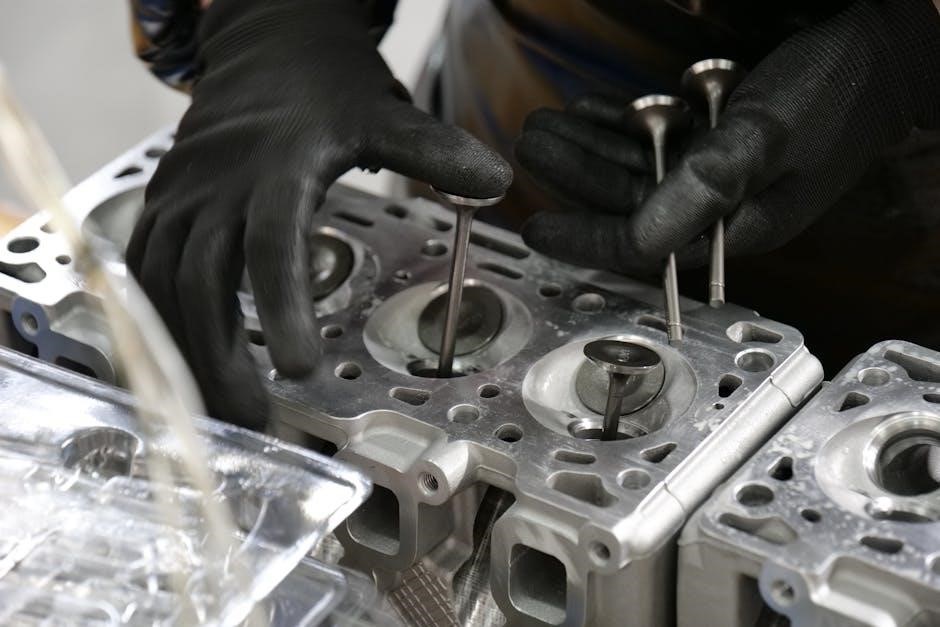
A thorough visual inspection of the TH400 reverse manual valve body is the first step in identifying potential issues. Examine all components for signs of wear, corrosion, or physical damage. Look closely at the valve body casing for cracks or distortions, and inspect the spool valves for scoring or pitting. Check balls should be free of wear and move smoothly within their seats.
Pay particular attention to the solenoids and their electrical connections, ensuring they are clean and undamaged – much like verifying access to eThuto requires a functional login. Examine springs for fatigue or breakage, and carefully inspect all seals for cracks or deterioration. Any evidence of wear or damage warrants further investigation or component replacement; This detailed assessment provides valuable clues about the valve body’s overall condition and potential failure points, guiding subsequent diagnostic and repair efforts.

Rebuilding a TH400 Reverse Manual Valve Body
CUT’s i-Enabler and Student Connect mirror the rebuilding process: careful disassembly, meticulous cleaning, component replacement, and precise reassembly for optimal function.
Disassembly Procedures
Prior to initiating disassembly, ensure a clean workspace and appropriate tools are readily available. Begin by carefully disconnecting all electrical connections to the solenoids, noting their positions for reassembly.
Next, systematically remove the valve body casing, paying attention to any retaining bolts or clips. Gently extract the spool valves and check balls, meticulously documenting their original locations and orientations.
As you proceed, observe and record the placement of springs and seals, as these are critical for proper function. Utilize a parts tray to organize components, preventing loss or misplacement.
Remember, similar to accessing eThuto via the CUT student portal, a methodical approach is key; a student number and password are like the correct tools and documentation. Careful observation during disassembly will greatly simplify the reassembly process, mirroring the system updates needed after CUT registration.
Cleaning and Inspection of Parts
Following complete disassembly, thoroughly clean each component with a suitable solvent, removing all traces of old fluid and debris. Inspect the valve body casing for cracks, warping, or corrosion, paying close attention to sealing surfaces.
Examine the spool valves and check balls for wear, scoring, or damage. Check springs for proper tension and length, replacing any that are fatigued or broken. Carefully inspect all seals for cracks, tears, or hardening, as these are vital for maintaining pressure.
Much like verifying access to eThuto requires a valid CUT student number and password, ensuring each part is in optimal condition is crucial. This meticulous inspection, similar to the 24-hour system update after registration, guarantees a successful rebuild.
Any questionable parts should be replaced to prevent future failures, mirroring the need for reliable access to online learning resources.
Replacing Worn Components
During the rebuild process, replace all worn seals, O-rings, and gaskets with new, high-quality equivalents. Damaged or scored spool valves and check balls must be replaced to ensure proper fluid flow and shifting performance. Replace any springs that exhibit reduced tension or are broken.
If the valve body casing itself is damaged beyond repair, it will need to be replaced entirely. Utilize a reputable parts supplier to obtain correct replacements, similar to accessing eThuto through the CUT student portal with the correct credentials.
Just as the CUT system requires a 24-hour update after registration, allowing time for proper component sourcing is vital. Prioritize quality parts to avoid premature failure, mirroring the importance of a stable online learning environment.
Ensure all replacement parts are compatible with the specific TH400 model year to maintain functionality.
Reassembly and Calibration
Carefully reassemble the TH400 reverse manual valve body, ensuring all components are properly seated and aligned. Lubricate all moving parts with transmission fluid during assembly to prevent friction and wear, much like ensuring smooth access to eThuto via the CUT portal.
Calibrate the valve body according to the manufacturer’s specifications, paying close attention to spring pressures and spool valve positioning. Accurate calibration is crucial for correct shift timing and overall transmission performance.
Verify the proper operation of all valves and solenoids before final installation, similar to verifying login credentials for CUT’s online systems. A thorough check prevents issues post-installation.
Remember, just as the CUT system requires updates, meticulous reassembly and calibration are essential for a reliable rebuild.

Installation and Adjustment
Following careful installation, adjust shift points for optimal performance, mirroring the CUT portal’s need for accurate student data and system access verification.
Installing the Rebuilt Valve Body
Carefully prepare the transmission case by thoroughly cleaning all mating surfaces, ensuring no debris or old gasket material remains. This meticulous preparation mirrors the importance of a clean login process for eThuto, CUT’s online learning platform. Gently position the rebuilt valve body into the transmission case, aligning it precisely with the dowel pins and bolt holes.
Install new gaskets and seals as required, applying a thin coat of assembly lubricant to prevent leaks and ensure proper sealing – similar to securing access to student portals with robust credentials. Torque the valve body bolts to the manufacturer’s specifications in a crisscross pattern, preventing warping or distortion.
Double-check all electrical connections to the solenoids, verifying they are secure and properly seated, much like ensuring a stable connection to CUT’s Student Connect. Finally, before proceeding, visually inspect the installation, confirming everything is correctly positioned and tightened.
Adjusting Shift Points
Precise shift point adjustment is crucial for optimal TH400 performance, mirroring the need for accurate information access via platforms like eThuto at CUT. This typically involves modifying the governor pressure and/or the vacuum modulator settings. Begin by verifying the correct vacuum signal to the modulator, ensuring no leaks or restrictions exist.
Adjust the governor pressure using a pressure gauge connected to the governor test port, referencing the manufacturer’s specifications for desired shift points. Small adjustments can significantly impact shift quality and feel.
Road test the vehicle after each adjustment, evaluating shift firmness and engagement points. Iteratively refine the settings until the desired shift characteristics are achieved, similar to refining search terms for optimal results on CUT’s online resources. Document all changes for future reference.
Testing and Verification
Thorough testing post-rebuild is paramount, akin to verifying access credentials for eThuto at CUT. Begin with a static leak-down test, applying air pressure to the valve body and checking for leaks at all ports and seals. Next, perform a dynamic pressure test using a transmission pressure tester while simulating gear changes.
Monitor pressure readings at various points within the valve body to confirm proper operation of spool valves and check balls. Road test the vehicle, paying close attention to shift quality, engagement speed, and overall transmission performance.
Utilize a scan tool (if applicable) to monitor transmission fluid temperature and any available diagnostic trouble codes. Confirm smooth, positive shifts throughout all gears, mirroring the seamless access to academic resources offered through CUT’s student portal.
Fluid Type and Level Considerations
Selecting the correct transmission fluid is crucial, much like a student needing the correct credentials for eThuto access at CUT. The TH400 typically requires a specific type of automatic transmission fluid – often Dexron III or a compatible modern equivalent. Always consult the vehicle’s service manual for the precise specification.
Incorrect fluid can lead to poor performance, premature wear, and valve body malfunction. After installation, carefully fill the transmission to the correct level, typically checked with a dipstick while the engine is running and in park or neutral.
Overfilling or underfilling can both cause issues. Regularly check the fluid level and condition, ensuring it remains clean and free of debris, maintaining optimal transmission health and reliability.

Resources and Further Information
CUT’s Student Connect, i-Enabler, and eThuto platforms offer support; similarly, online forums, technical manuals, and parts suppliers aid TH400 research.
Online Forums and Communities
Engaging with online communities dedicated to the TH400 transmission is invaluable for troubleshooting and knowledge sharing. These forums often host experienced builders and enthusiasts willing to assist with diagnosing issues related to the reverse manual valve body. Platforms like dedicated automotive forums, and transmission-specific boards, provide a space to ask questions, share experiences, and access a wealth of accumulated expertise.
Searching archived discussions can reveal solutions to common problems and offer insights into potential pitfalls during rebuilding or installation. Many members document their projects with detailed photos and videos, offering visual guidance. Remember to clearly articulate your specific issue when posting, including details about the vehicle, transmission modifications, and any symptoms observed. Respectful interaction and adherence to forum rules are crucial for a positive experience. Utilizing these resources can significantly accelerate the learning process and improve the success of your TH400 project.
Technical Manuals and Diagrams
Accessing official technical manuals is paramount when working with the TH400 reverse manual valve body. These manuals, often available through transmission parts suppliers or online archives, provide detailed exploded views, parts lists, and precise specifications crucial for accurate rebuilding and diagnosis. Diagrams illustrating the valve body’s internal workings are essential for understanding the function of each component – spool valves, check balls, and passages – and how they interact.
Factory service manuals offer step-by-step instructions for disassembly, inspection, and reassembly, ensuring proper torque specifications and clearances are maintained. Supplementing these with schematic diagrams of the hydraulic circuits helps trace fluid flow and identify potential blockage points. Remember that variations exist between TH400 model years; therefore, obtaining the manual specific to your transmission’s production date is vital for accurate information and successful repairs.
Parts Suppliers

Sourcing quality parts is critical when rebuilding a TH400 reverse manual valve body. Several reputable suppliers specialize in automatic transmission components, offering complete rebuild kits, individual parts like spool valves and check balls, and updated seals. Online retailers provide convenience and a broad selection, but verifying vendor credibility is essential. Look for suppliers with positive customer reviews and clear return policies.
Local transmission shops often stock common TH400 parts and can offer expert advice. Specialty transmission parts houses cater specifically to professional rebuilders, providing access to hard-to-find components and technical support. When ordering, ensure parts are compatible with your specific TH400 model year to avoid fitment issues. Prioritize genuine or high-quality aftermarket parts to ensure durability and reliable performance after the rebuild.